The Crayonz JournalStart a brand
Custom Merchandise Ideas for Creators, Clubs and Brands
Custom merchandise for three different starting points, a content channel, a club or team, and a small brand testing a line, with the actual numbers behind listing it.
By the Crayonz team5 min read
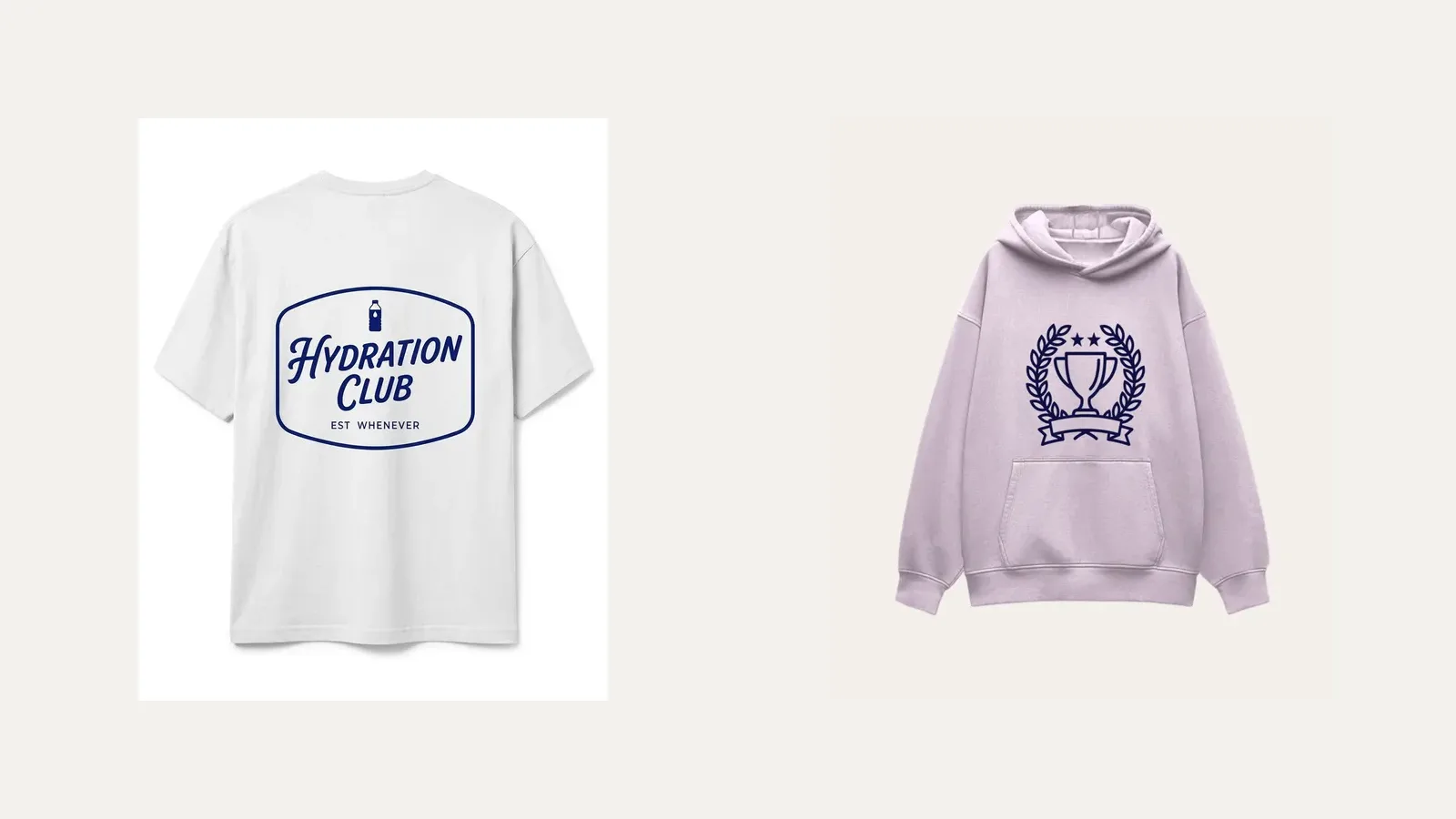
Custom merchandise requests usually come from one of three places: someone building a following and wanting something fans can actually buy, a club or team wanting a shared kit, or a small brand testing whether a design sells before committing to real stock. The path is mostly the same for all three: one listing, nothing held in stock, printed only once someone orders it.
Below is what actually works as merch rather than a logo slapped on a blank, the real numbers behind listing it, and where to start depending on which of the three you are. Start in the studio once you have a direction.
What actually sells as merch
A logo alone rarely does the work people expect. A logo is built to be recognised at a glance on a storefront or a profile picture, not necessarily to be something someone wants to wear in public. What gets worn again, across a channel's merch, a club's kit and a brand's first drop alike, is usually one of a few specific things.
- An inside joke or recurring phrase your audience already repeats back to you, not a slogan invented for the shirt.
- A simple mascot or crest that can be reused across a whole range, not redrawn for every new product.
- A date, a number or an edition mark, which gives a one-off drop a reason to exist beyond "buy this".
- A member's own name or initials, for a club or team kit where the shared design plus a personal touch matters more than the design alone.
Three starting points
A content creator's merch succeeds or fails on whether it feels like it came from the channel specifically, not a generic shop. A club or team's kit succeeds on consistency, the same mark worn the same way by everyone, which is what makes a group photo read as a team rather than a crowd. A new brand's first drop succeeds by answering one question cheaply: does anyone actually want this, before any money goes into a second design.
A channel's own catchphrase, set as a clean wordmark
Whatever your audience already says back to you in comments, set in bold clean type rather than redesigned into something unfamiliar.
bold clean typography reading "[your catchphrase]", centred back placement, single colour, print-ready, plain background
A simple crest for a club or team kit
A circular or shield emblem built from your club's own name and a simple symbol, designed once and reused across every member's piece.
flat emblem graphic with a thin border, built around the text "[club or team name]", centred chest placement, single colour, print-ready, plain background
A single icon to test a new small brand
One simple icon, kept deliberately plain, for a first drop meant to find out whether the idea sells before any second design gets made.
minimal single-colour icon of [a simple subject], small chest placement, print-ready, plain background
What it costs to list, and what you keep
Listing a design on the Crayonz marketplace is free. Each garment has a base price covering the blank, the print, payment processing and shipping. You set the price it sells at above that base, and you keep the whole difference, with no percentage cut on top. There is no inventory on your side either way, nothing is printed until someone actually orders it, so a design that never sells costs nothing beyond the time it took to make.
| Garment | Base price | Example listing price | You keep |
|---|---|---|---|
| Classic T-Shirt | ₹615 | ₹1,015 | ₹400 |
| Classic Polo | ₹755 | ₹1,155 | ₹400 |
| Classic Heavyweight Hoodie | ₹1,030 | ₹1,430 | ₹400 |
| Classic Sweatshirt | ₹855 | ₹1,255 | ₹400 |
Base prices from crayonz.ai/sell, verified 2026-10-02. The worked example sets each listing ₹400 over base, but you choose your own price above the base for every garment. Payouts go out every Monday through Cashfree once your balance clears ₹100 and your payout details are verified.
Pricing a first drop is mostly a judgement call rather than a formula. A design with a built-in audience, a channel's own catchphrase or a club everyone already belongs to, can usually carry a bigger margin than a cold, untested idea aimed at strangers. A brand-new design with no existing audience behind it tends to move faster priced closer to the base while you are still finding out whether it sells at all.
Picking a garment for the drop
There is no minimum order on Crayonz, so a drop can start as one piece and grow from there rather than committing to a bulk run up front. A tee is the cheapest entry point for fans; a polo reads more official for a club's match-day kit; a hoodie or cap works as the higher-price option in the same drop. Running two or three garments with the same design, rather than one garment in many colours, tends to give buyers a clearer reason to pick between them.
A cap version of the same mark, for a lower price point
The same simple mark from the main design, scaled down for a cap front panel, giving the drop a second, cheaper item without designing anything new.
minimal single-colour icon or wordmark, scaled for the front panel, print-ready, plain background
A mug or poster rounds out a drop for people who want to support it without buying another shirt, at a lower price than any garment in the range. For a club especially, a mug works well as the thing a member buys in addition to the kit, not instead of it.
Getting the first drop in front of people
The Crayonz marketplace puts a listing in front of people already browsing custom and graphic apparel, with nothing held in stock on your side. Beyond the marketplace, most merch still gets discovered through the channel, club or brand's own audience first, a post showing the design rather than a cold listing.
What actually gets a first drop noticed is usually showing the process, not just the finished product: a quick post of the prompt that generated the design, or the reasoning behind picking one garment colour over another. People buy into something they watched get made more readily than something that just appears, already finished, with no story attached.
Avoiding the most common first-drop mistake
The single most common mistake on a first merch drop is designing for a generic audience rather than the specific one that already exists. A design built to appeal to everyone usually ends up appealing to no one in particular, while a design built around one very specific inside joke, crest or catchphrase gives the people who already follow a reason to actually buy it rather than just like a post about it.
The second most common mistake is treating the first design as the only one worth making. A cheap, low-stakes test, one icon, one wordmark, listed for free, tells you more about what an audience actually wants than any amount of planning does, and nothing is lost if it does not sell since nothing was printed until someone ordered it.
A third, smaller mistake worth naming: pricing the very first drop too cautiously out of worry that nobody will pay above the base. A listing priced too low rarely moves faster than a fairly priced one, since the decision to buy usually comes from wanting the specific design, not from chasing the lowest number on the page.
A logo on a blank shirt is not merch. An inside joke, a crest or a date your audience already recognises is.
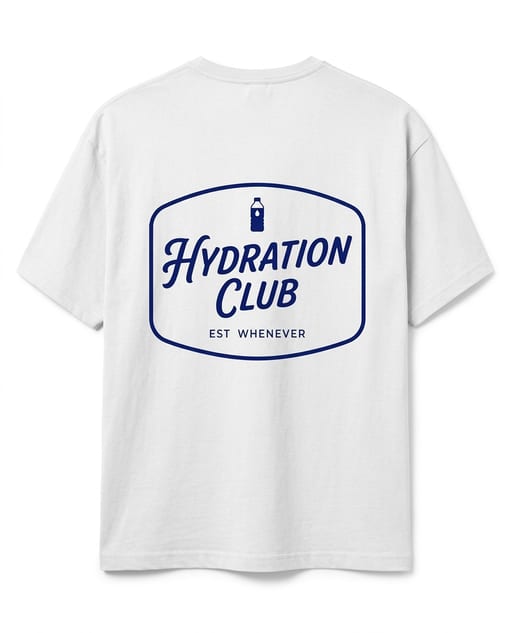
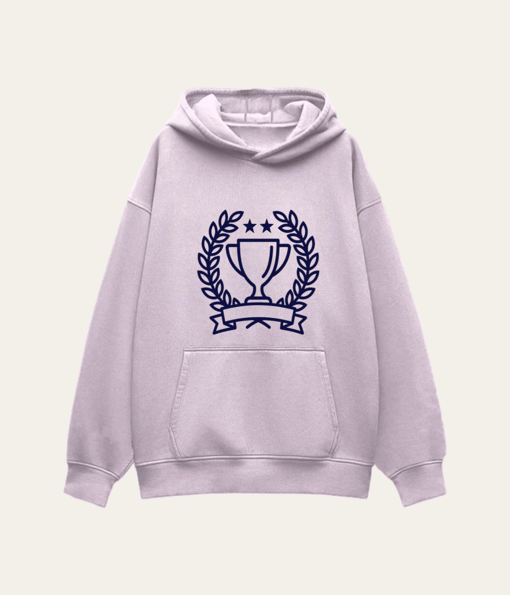
Club-style merch already on Crayonz
Questions people ask
Does listing merchandise on Crayonz cost anything?
No. Listing a design is free, and there is no percentage cut on top of the base price, you keep the whole difference between your listing price and the base, whatever you set it at.
Is there a minimum order for a merch drop?
No. Pricing is per piece at any quantity, so a drop can start with one piece and grow rather than committing to bulk stock upfront, and nothing is printed until someone actually orders it.
Which garment works best for a club or team kit?
A polo or tee for the main piece and a cap for a cheaper add-on are common choices, but any garment on Crayonz can carry the same design, so the right one depends on the budget and the kind of kit the group wants.
When do I actually get paid?
Payouts go out every Monday through Cashfree once your balance clears ₹100 and your payout details are verified. There is nothing further to request manually once that threshold is met.
Do I need design skills to make the first piece?
No. Describe the idea in the studio and the AI draws a print-ready design in about a minute, which you can still resize, recolour and reposition yourself before listing it.
Your idea, on a shirt, this week.
Upload a photo or describe it. One piece, no minimum, arrives in 4 to 8 days across India.