
The Crayonz JournalFabric & fit
What Is Terry Cotton? Terry vs French Terry vs Fleece
A plain-English guide to terry, French terry, fleece and jersey: the loop, the brush, and why it changes how a tee feels and prints.
By the Crayonz team5 min read
Terry cotton is a knit fabric with loops on one side instead of a flat, smooth back. Those loops are what give terry its weight and texture, heavier and softer than a plain t-shirt jersey, but still a knit, so it stretches and moves rather than holding a stiff shape.
"Terry" gets used loosely online for towels, bathrobes, sweatshirts and oversized tees alike, which is confusing until you realise the loops are the one constant. What changes between one terry fabric and the next is where the loops sit, how tight the knit is, and whether anything is done to those loops after knitting.
Terry, French terry, fleece and jersey: what actually differs
Towel terry is the original: a woven fabric with uncut loops on both faces, prized for how much water it can soak up. It is what a bath towel and a bathrobe are made from, and it dates back far enough that linen terrycloth has been found from 4000 BCE, long before the modern cotton version (Wikipedia: Terrycloth).
The modern version traces to England: the towel manufacturer Christy started industrial production in 1850 after studying handwoven terrycloth made in Turkey. The name itself likely comes from the French word tiré, meaning "drawn", originally used for uncut velvet rather than towels (Wikipedia: Terrycloth).
French terry is a different animal: knit, not woven, with a smooth flat face on the outside and soft, unbrushed loops only on the inside. It became the standard fabric for hoodies, joggers and sweatshirts precisely because that smooth outer face takes a print cleanly while the looped inside still traps air and feels soft against skin (Wikipedia: Terrycloth).
Fleece starts life as the same basic knit as French terry, but the inside loops get mechanically brushed into a raised, fuzzy nap instead of staying looped. That brushing step is what makes fleece warmer and plusher than French terry at a comparable weight, and also why fleece tends to run heavier (French Terry vs Fleece, White Cotton).
Plain jersey, the fabric of a basic t-shirt, is the lightest of the four. It is a flat single knit with no loop structure on either face, which keeps it thin and breathable but gives it none of the texture or warmth terry or fleece carry.
Sewing with French terry
French terry is knit, not woven, so it needs a ballpoint or jersey needle and a serged or zig-zag edge finish to keep it from fraying or popping its stitches. The fabric looks and feels different on each face, smooth on one side, loopy on the other, and either can face outward depending on the design (Sewguide).
GSM, and what each range actually feels like
GSM means grams per square metre: a 10cm x 10cm swatch is weighed and the figure is scaled up. It is the standard way mills and factories describe fabric weight, and it maps fairly consistently onto what a fabric feels like in the hand (GSM fabric weight chart, White Cotton).
| GSM range | Fabric | What it typically feels like |
|---|---|---|
| 140-180 GSM | Light cotton jersey | Thin, breathable, basic-tee weight |
| 180-280 GSM | Mid to heavyweight jersey | Premium or oversized tee weight, holds its shape on a hanger |
| 280-450 GSM | French terry | Standard-to-heavyweight hoodie and sweatshirt fabric, smooth face, looped back |
| 260-580 GSM | Brushed fleece | Warmer and plusher than French terry at the same weight, brushed nap on the inside |
These are typical commercial ranges, not a universal rule. GSM varies by mill, yarn and finish, which is why a single number can describe quite different-feeling fabrics depending on fibre content and construction (GSM fabric weight chart, White Cotton).
French terry vs fleece, side by side
| Factor | French terry | Brushed fleece |
|---|---|---|
| Interior finish | Looped, unbrushed | Brushed into a soft pile |
| Warmth | Moderate | High |
| Breathability | High | Moderate |
| Print quality | Excellent, smooth face | Good, slightly fuzzier face |
That smoother face is why French terry is the better pick for a print-heavy design: a flat, even surface gives cleaner ink coverage and sharper detail than a brushed one (French Terry vs Fleece, White Cotton).
Why oversized fits lean on French terry specifically
An oversized cut already puts more fabric across the body than a regular fit, so a heavy brushed fleece in that much yardage can start to feel like wearing a blanket. French terry's lighter, unbrushed loop structure keeps an oversized silhouette heavy enough to drape with some weight without tipping into bulky. That's a large part of why it has become the default fabric for oversized tees rather than fleece.
Plain jersey is the other option for an oversized cut, and it has its place: a jersey oversized tee is lighter and cooler, with none of the texture terry carries. Pick jersey when you want the loosest, coolest possible fit with no added warmth, and terry when you want the same loose cut with more body and a softer hand-feel.
Quick glossary
- Loop / loop-back: the small, uncut loops on the reverse of a terry knit that trap air and add softness.
- Brushed: a finishing step that combs those loops into a raised, fuzzy nap, turning a terry knit into fleece.
- GSM: grams per square metre, the standard way fabric weight is measured and compared.
- Drape: how a fabric falls and moves on the body; lighter knits sit close, heavier ones hold more shape.
- Hand-feel: the texture and weight a fabric gives when touched, which a GSM number alone does not fully capture.
Why it matters for what you order
A looped, unbrushed terry knit holds a large print cleanly, drapes with some weight instead of clinging, and still breathes enough to wear for most of the year. That's exactly the combination a big back print or a full front graphic needs.
Your photo, printed full width across the back
A drop-shoulder oversized cut and a smooth terry face give a full-bleed back print room to actually read as one image, not a cropped square.
warm full colour photo print based on an uploaded photo, filling the back print area edge to edge, print-ready, high resolution
A small chest logo, kept clean by the smooth face
A single-colour logo prints sharp on terry's flat outer face, with none of the texture bleed a brushed or heavily looped fabric would give it.
minimal single colour logo centred on the chest, bold simple shape, print-ready, plain background
What this means for your order
Crayonz's Oversized Terry Tee is ₹999, S-XXL, unisex, drop-shoulder, with a large print area on both the front and the back. It does not list a GSM figure, so judge it by the fit description and the size chart rather than a printed number.
It comes in 12 colourways: Baby Blue, Black, Bottle Green, Flamingo, Jade, Lavender, Light Baby Pink, Maroon, Navy Blue, Off White, Red and White. Upload your own image or describe an idea for the AI to draw, place it inside the front or back print area, and buy now.
Oversized terry tees, already made
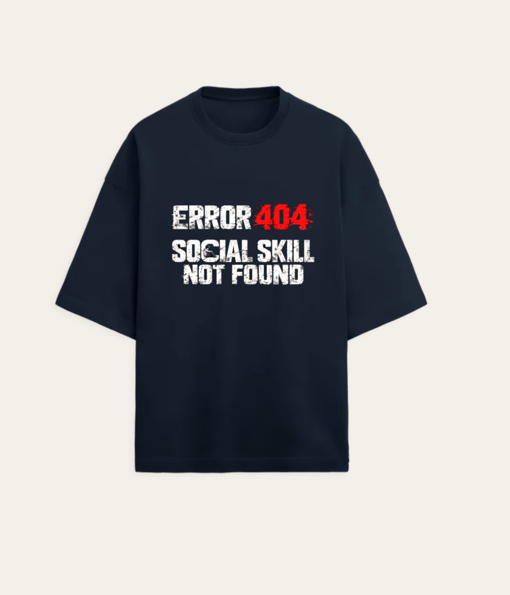
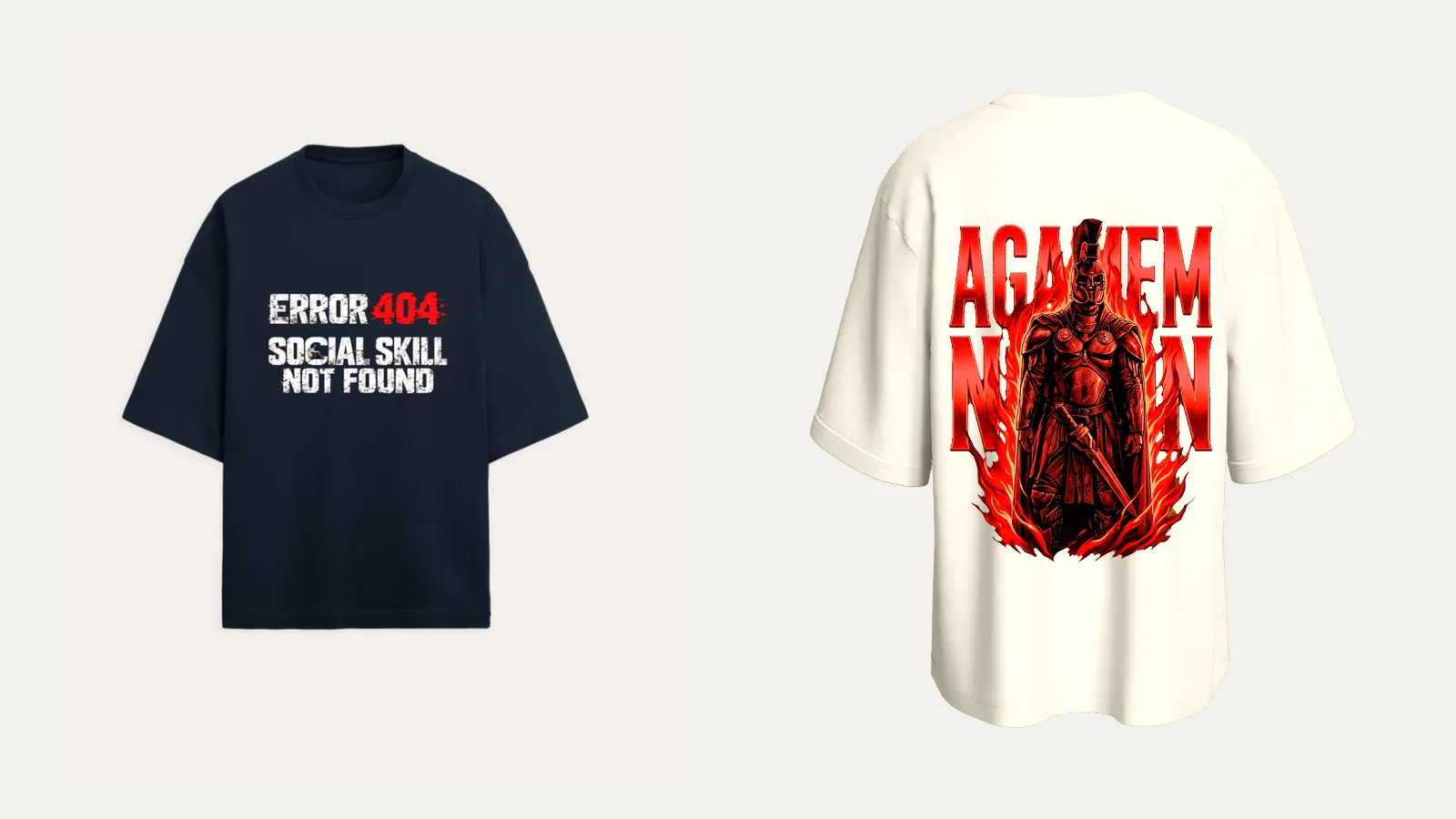
Error 404 — Oversized Terry T-Shirt
Oversized Tee / ₹999
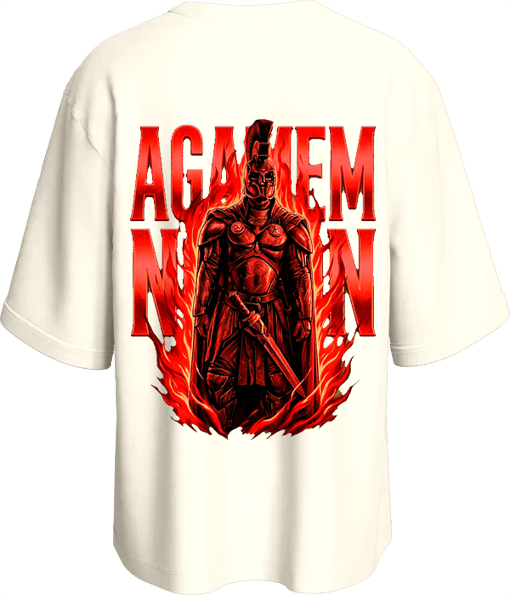
Agamemnon Inferno Tee
Oversized Tee / ₹999

Best Mode - Oversized T shirt (For Both Male & Female)
Oversized Tee / ₹999
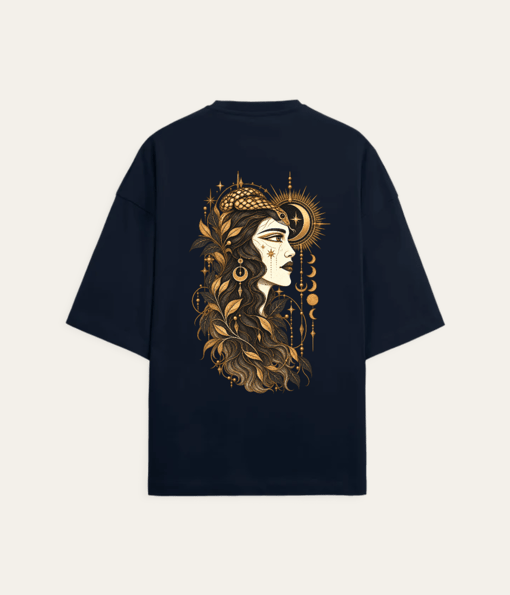
Mystical Golden Woman Oversized T-Shirt
Oversized Tee / ₹1,000
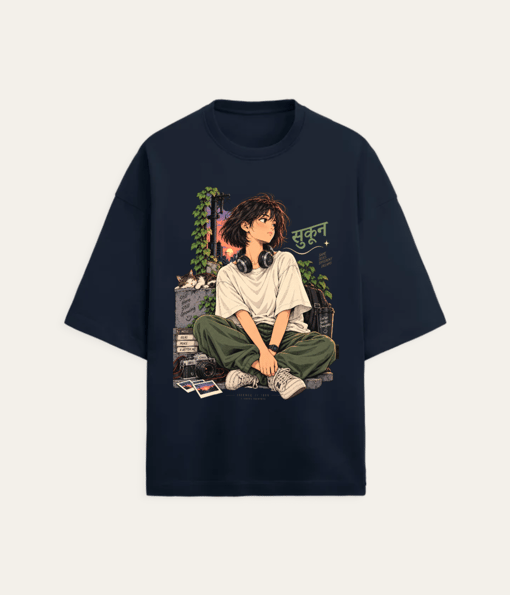
Sukoon Vibes - Retro Anime Streetwear
Oversized Tee / ₹999
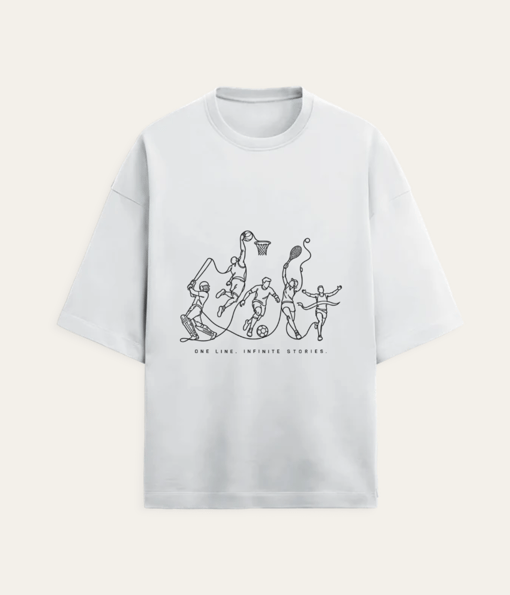
ONE LINE, INFINITE STORIES - Oversized T-Shirt
Oversized Tee / ₹999
The loop is what makes it terry. Whether that loop is left alone or brushed into a nap is the whole difference between French terry and fleece.
Questions people ask
What is terry cotton?
A knit or woven cotton fabric with loops on one or both faces instead of a flat back. The loops trap air and add softness and weight, which is why terry fabrics run heavier than plain jersey.
What is the difference between terry and French terry?
Classic towel terry is woven with loops on both sides, built for absorbency. French terry is knit with a smooth outer face and loops only on the inside, built for sweatshirts, hoodies and oversized tees rather than towels.
What is the difference between French terry and fleece?
Both start as a similar knit. Fleece gets its inside loops mechanically brushed into a raised, fuzzy nap, which makes it warmer and plusher; French terry leaves the loops unbrushed, which keeps it lighter and more breathable.
What GSM is terry fabric?
Commercial French terry typically runs from around 280 to 450 GSM, depending on the mill and intended weight. There is no single fixed number, since GSM varies by yarn, finish and construction even within one fabric type.
Why doesn't Crayonz list a GSM for the Oversized Terry Tee?
The product page describes it by fit instead: unisex, drop-shoulder, S-XXL, with a large front and back print area. Go by that description and the size chart rather than looking for a printed GSM number.
Is French terry good for printing a custom design?
Yes. Its smooth, flat outer face takes ink more evenly than a brushed or heavily looped fabric, which is part of why it is the standard fabric for printed hoodies, sweatshirts and oversized tees.
Your idea, on a shirt, this week.
Upload a photo or describe it. One piece, no minimum, arrives in 4 to 8 days across India.