
The Crayonz JournalFabric & fit
240 GSM Oversized T-Shirt: What the Weight Means
What GSM actually measures, which Crayonz garments carry a published weight, and why heavier is not automatically better.
By the Crayonz team5 min read
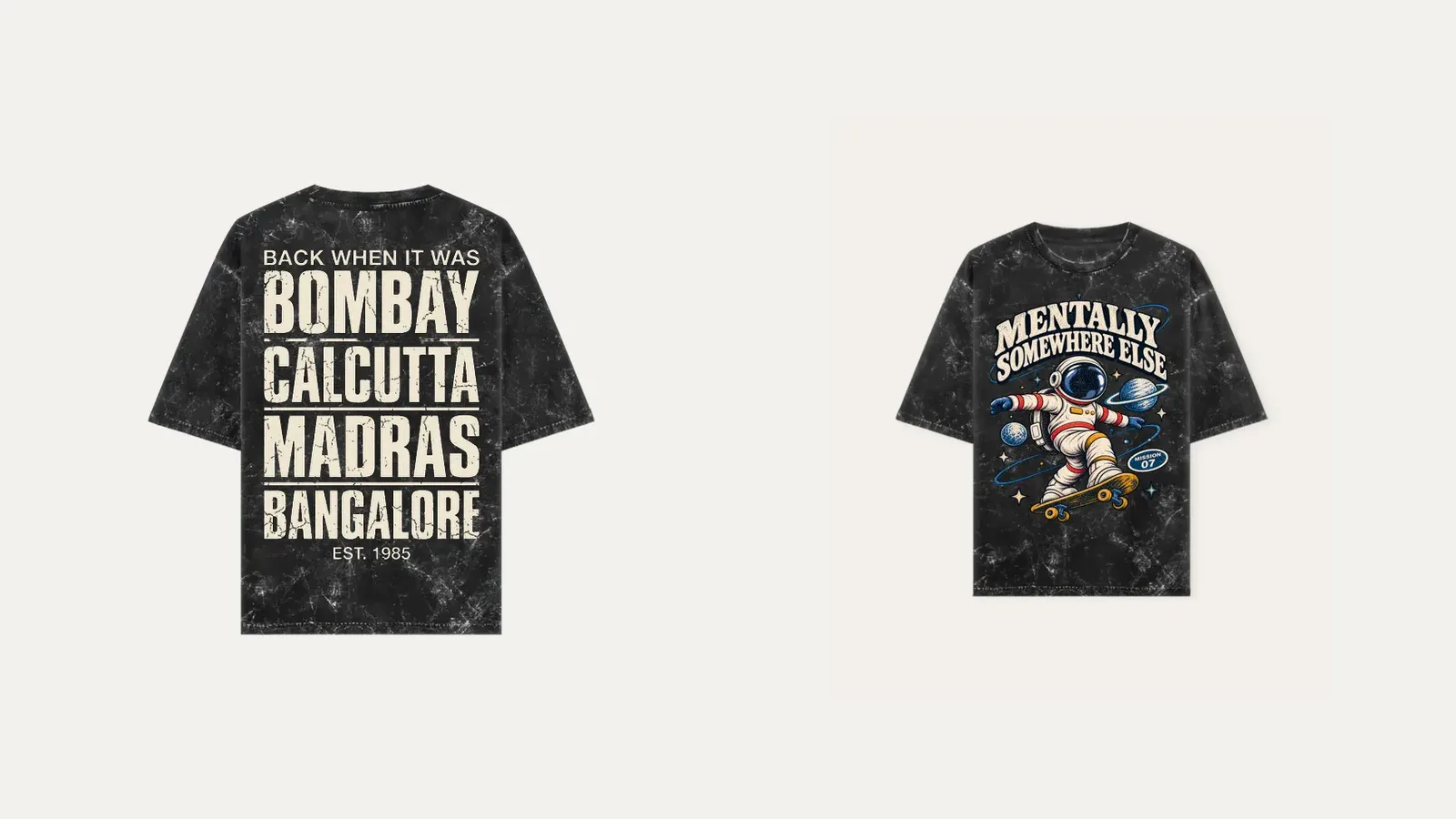
GSM stands for grams per square metre, a straightforward measure of how much fabric weighs for a given area. A higher number means a thicker, heavier, more structured fabric; a lower number means something lighter and more breathable. Sellers generally group lightweight tees around 120 to 150 GSM and heavyweight ones from about 180 GSM up, though the exact cutoffs vary by brand (source). This guide walks through what that means for a Crayonz oversized tee specifically, and links to the studio once you know which weight you want.
On an oversized tee specifically, weight matters more than on a regular fit, since the drop-shoulder cut gives the fabric more surface to hang and move on. A heavier fabric holds its shape through that drape; a lighter one moves more and feels cooler against the skin.
Why GSM is not printed on every listing
GSM is a manufacturing specification, not something every seller tests and publishes for every product. A brand usually states it when the number is genuinely part of the pitch, a heavyweight streetwear tee, for instance, but leaves it off a lighter, more ordinary cut where the fit and the print matter more than the exact fabric weight. An absent GSM figure is not a missing fact so much as a sign the fabric weight was not the selling point for that particular piece.
This guide only states a GSM figure where Crayonz has actually published one for that exact garment. Anything else online attaching a specific number to the Oversized Terry Tee or the Classic T-Shirt should be treated as a guess rather than a fact, however confidently it is stated, since the underlying manufacturing specification simply has not been published for either one.
The one Crayonz garment with a published 240 GSM weight
The Acid Wash Tee is oversized and 240 GSM cotton, with every piece washed slightly differently so no two garments look exactly alike. At 240 GSM it sits solidly in the heavyweight range by most sellers' definitions, noticeably thicker than a typical everyday tee.
| Garment | Weight | Fit | Price |
|---|---|---|---|
| Acid Wash Tee | 240 GSM cotton | Oversized | ₹1,299 |
| Classic Sweatshirt | 300 GSM, 90/10 cotton-poly | Regular, crewneck | ₹1,299 |
| Varsity Jacket | 300 GSM brushed fleece | Regular | ₹1,799 |
| Oversized Hoodie | 400 GSM, 90/10 cotton-poly | Oversized, drop shoulder | ₹1,899 |
| Oversized Terry Tee | Not published | Oversized, drop shoulder | ₹999 |
| Classic T-Shirt | Not published | Regular | ₹699 |
The Oversized Terry Tee has no recorded GSM figure, so any specific number attached to it elsewhere online is a guess, not a Crayonz fact. What is true about it: terry is a looped-back knit, which generally has a heavier, softer hand-feel than plain jersey cotton even without a published weight to quote. The Classic T-Shirt has no published figure either, and is the lightest-feeling cut in the catalogue by fit alone, even without a number attached.
Cotton-poly blends and what the mix actually changes
Two of the heavier garments in the table, the Classic Sweatshirt and the Oversized Hoodie, are 90/10 cotton-poly rather than pure cotton. A small polyester share like that mostly affects recovery, how well the fabric springs back after stretching, and dries slightly faster after a wash than 100% cotton would. It does not make the fabric feel plasticky at a 90/10 ratio; the hand-feel is still close to cotton, with the poly mainly working behind the scenes on shape retention.
The Varsity Jacket's 300 GSM brushed fleece sits between the two categories in a different way again, brushed on the inner face for warmth while staying printed rather than embroidered on the outside, which is the one garment in the catalogue where the weight and the finish both work together to suggest a heavier, more structured piece than the actual GSM number alone would suggest.
Caring for a heavier printed garment
A heavier fabric is not automatically lower maintenance. Wash cold and inside out, and skip the tumble dryer where possible, the same advice that applies to any printed cotton blend. Heat is what actually shortens a print's life over time, not the raw number of washes, so air drying matters more on a heavyweight piece than the thickness of the fabric does.
Heavier does not automatically mean better
A lighter fabric breathes more and suits warmer weather or everyday wear where comfort matters most. A heavier fabric holds a large, bold print flatter and more durably, and suits streetwear graphics or cooler-weather layering better than a thin tee would. For most of India's climate, that trade-off is worth weighing against the season an order is actually going to be worn in, not just the look in a photo.
Print technique matters here too, not just comfort. A heavier, more textured fabric like the Acid Wash Tee's marbled cotton already has visual weight of its own, so a busy, highly detailed design can end up fighting the texture underneath it rather than sitting cleanly on top. A lighter, smoother fabric gives fine detail a calmer surface to print onto, which is why the two ideas below point at different weights rather than the same one twice.
A bold flat graphic suited to a heavyweight fabric
A large, simple illustration with solid shapes rather than fine detail, the kind of design that holds up well on the Acid Wash Tee's thicker 240 GSM cotton.
bold flat illustration of [a subject], thick simple shapes, no fine detail, centred chest placement, single colour, print-ready, plain background
Thick typography that holds up against texture
Bold, condensed letterforms rather than a thin or delicate font, since fine detail gets swallowed faster by a heavier, textured fabric than it would on something lighter.
bold condensed typography reading "[your word]", thick strokes, centred chest placement, single colour, print-ready, plain background
A small, fine-line design for a lighter fabric
A delicate single-line illustration, the kind of fine detail that reads cleanly on a lighter, regular-weight tee rather than a heavyweight one.
minimal continuous-line-art illustration of [a subject], thin fine linework, small chest placement, single colour, print-ready, plain background
What this means for your order
Want a genuinely heavyweight oversized tee with a documented 240 GSM: the Acid Wash Tee at ₹1,299, XS to XXL, every piece washed differently. Want the classic oversized silhouette without a published weight behind it: the Oversized Terry Tee at ₹999. Either way, pricing stays the same whether the graphic is small or fills the whole print area, and the garment colour range differs too: the Acid Wash Tee comes in five washed colours, Black, Bottle Green, Maroon, Navy Blue and Olive Green, while the Oversized Terry Tee runs to twelve.
If the decision still comes down to feel rather than numbers, that is a reasonable way to choose. GSM is one input among several, alongside fit, colour range and the actual print you want to put on top of it, not the single factor that should decide the order on its own.
GSM tells you how the fabric will feel. It does not tell you whether the print on top will look good; that still comes down to scale and placement.
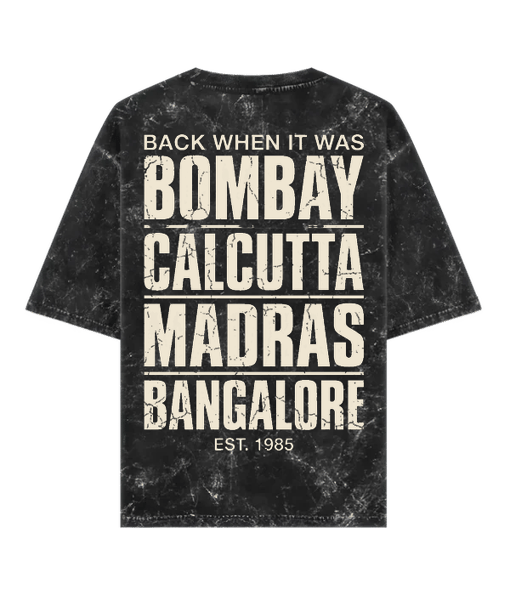
Acid Wash Tee designs already on Crayonz
Questions people ask
What does GSM mean on a t-shirt?
Grams per square metre, a measure of how much the fabric weighs for a given area. A higher number is a thicker, heavier fabric; a lower number is lighter and more breathable, and sellers generally group heavyweight from about 180 GSM up.
Which Crayonz garment is actually 240 GSM?
The Acid Wash Tee is the one Crayonz garment with a published 240 GSM weight, and it is oversized, with every piece washed slightly differently.
Is the Oversized Terry Tee heavyweight?
It has no published GSM figure, so no specific number can be stated for it. Terry is a looped-back knit, which typically has a heavier, softer hand-feel than plain jersey cotton even without a quoted weight to point to.
Does a heavier fabric cost more to print on?
No. Pricing is per piece at any quantity and does not change based on the fabric weight or garment, whether it is the lightest tee or the heaviest hoodie in the catalogue.
Does a heavier t-shirt shrink less in the wash?
Heavier cotton fabrics are typically more stable through washing than very lightweight ones, though this depends on the specific weave and wash care followed, washing cold and air drying helps either way.
Your idea, on a shirt, this week.
Upload a photo or describe it. One piece, no minimum, arrives in 4 to 8 days across India.